Blog
UAE National Day Campaigns That Do Not Feel Like Every Other Flag Post
UAE National Day (Eid Al Etihad) campaigns with understanding: rules on national symbols, timing around 2-3 December, Arabic copy and when to stay quiet.
Quick Answer
Eid Al Etihad, the UAE’s National Day, falls on 2 December every year, with 2 and 3 December fixed as public holidays; in 2026 the country marks its 55th anniversary on Wednesday 2 and Thursday 3 December, and an extension into Friday 4 December is possible but not confirmed at the time of writing. For brands the occasion is a real commercial moment, but most campaigns fail the same way: a flag, a “Happy National Day” line and nothing that shows understanding.
The rules are also stricter than most creative teams assume. The flag is protected by Federal Law No. 2 of 1971 as amended, commercial use is treated as improper, and offending it is a crime carrying 10 to 25 years’ imprisonment and a fine of at least AED 500,000; the media content standards separately require respect for the State’s symbols and national identity, with fines up to AED 500,000 for violations. The campaigns that land are built on the values the union stands for (unity, tolerance, generosity, progress), are written in Arabic that a native speaker has checked, respect the quiet of Commemoration Day on 30 November, and are timed around a long weekend when the audience is at home, in malls and on the road. Some brands should simply post a respectful greeting and stop; this article explains which.
Scroll any UAE brand feed on 2 December and the posts merge into one. Red, green, white and black gradient. A silhouette of the skyline. “Happy 55th National Day” in a font the brand never otherwise uses. A flag emoji. The intention is good and the effect is nothing, because the audience has seen four hundred of them by lunchtime and none of them said anything the brand alone could say.
This guide is for the creative and marketing teams who would like to do better than that, and for the ones who are not sure whether to post at all. It covers what Eid Al Etihad means and why the usual post misses it; the rules on the flag and national symbols, which are stricter than the average brand realises; how to time work around the 2 to 3 December long weekend; campaign approaches that show understanding rather than decoration; why Arabic copy must be checked by a native speaker; and the case for staying quiet. It sits inside our UAE marketing calendar for 2027 and alongside our guide to the UAE advertising content standards, which governs everything below.
What Eid Al Etihad Means and Why Most Brand Posts Miss It
The occasion marks 2 December 1971, when six emirates (Abu Dhabi, Dubai, Sharjah, Ajman, Umm Al Quwain and Fujairah) united to form the United Arab Emirates; Ras Al Khaimah joined on 10 February 1972. The official name, Eid Al Etihad, means Festival of the Union, and the name is the point. The day is not primarily about the flag or the fireworks; it is about the decision by seven rulers to build one country, and about what that union has produced since: a nation of more than 200 nationalities living under one set of laws, with tolerance, generosity and ambition as the values it chooses to celebrate about itself.
The day sits inside a cluster of national moments that brands should know. Flag Day is 3 November, when institutions raise the flag together. Commemoration Day (formerly Martyrs’ Day) is 30 November, honouring Emiratis who died in service, and it is a day of reflection, not celebration; a minute’s silence is observed nationally at 11.30am. Eid Al Etihad follows on 2 December. The official government celebration each year is a large staged show, hosted in a different emirate, and the country’s public spaces fill with lights, parades and family events for the week.
Brand posts miss the meaning when they treat the day as a colour scheme. A campaign that understands it speaks to union: to people from different places building something together, to hospitality toward the guest, to the pride of a young country that did in fifty-five years what took others centuries. Those are themes a brand can hold honestly if its own story touches them, and cannot hold if it does not.
The Rules on National Symbols and the Flag
This is the section to read twice.
The UAE flag is defined and protected by Federal Law No. 2 of 1971 Concerning the Union Flag, as amended by Federal Decree-Law No. 13 of 2019. Under Article 3, whoever publicly drops, damages or offends the flag in any manner is punished with imprisonment of 10 to 25 years and a fine of not less than AED 500,000, and the offence is classed as a crime against state security. The same penalty applies to offending the flag of any emirate, the GCC flag or the flag of any other state. Article 176 of the Penal Code separately punishes insulting or mocking the State, its flag, emblem, symbols or institutions. The Public Prosecution publishes reminders of these penalties around Flag Day and National Day each year, including that a torn, faded or improperly handled flag is a misuse.
For brands, the consequences are these.
| Do not | Why |
|---|---|
| Put the flag on products, packaging, merchandise or giveaways | Commercial use of the flag is treated as improper; the flag is not a brand asset |
| Alter the flag’s colours, proportions or layout to fit a design | The form, colours and dimensions are prescribed by law |
| Overlay text, logos or graphics on the flag | No additions may be placed on the flag |
| Use the flag as a background for a sale, discount or price | Trivialises the symbol; also fails the content standards |
| Drape, crumple, cut, animate falling or “dissolve” the flag in motion graphics | Any depiction that could read as dropping, damaging or disrespecting |
| Use the national emblem (the falcon) or images of the rulers | Government symbols and identities are not for commercial use |
| Use the official Eid Al Etihad identity and marks | These belong to the organising committee; use requires permission |
| Print flags or decorations that are not the UAE flag or approved Eid Al Etihad items for distribution | The Ministry of Interior’s annual rules restrict shops and drivers to approved items |
The content standards add a second layer. Standard 2 requires respect for the State’s governance system, symbols and institutions; Standard 5 requires respect for the cultural heritage and national identity of the UAE; and Cabinet Decision No. 42 of 2025 sets fines of AED 50,000 to AED 500,000 for disrespecting the State’s system, symbols and institutions.
What is permitted, and what the best campaigns use, is the palette without the flag: the four colours as colour, not as a flag; the number of the anniversary; imagery of the country and its people; the values of the union; and, for vehicles and premises, decoration within the rules the police publish each year. Abu Dhabi Police, for example, have set a permitted vehicle-decoration window (in recent years, roughly 25 November to 6 December), allowed flags, national phrases and decals on the sides of vehicles, and prohibited anything that obstructs windows or visibility, with fines and impounding for breaches. If your campaign involves a fleet, a storefront or a branded activation, read the current year’s rules first.
Timing Around the 2 to 3 December Long Weekend
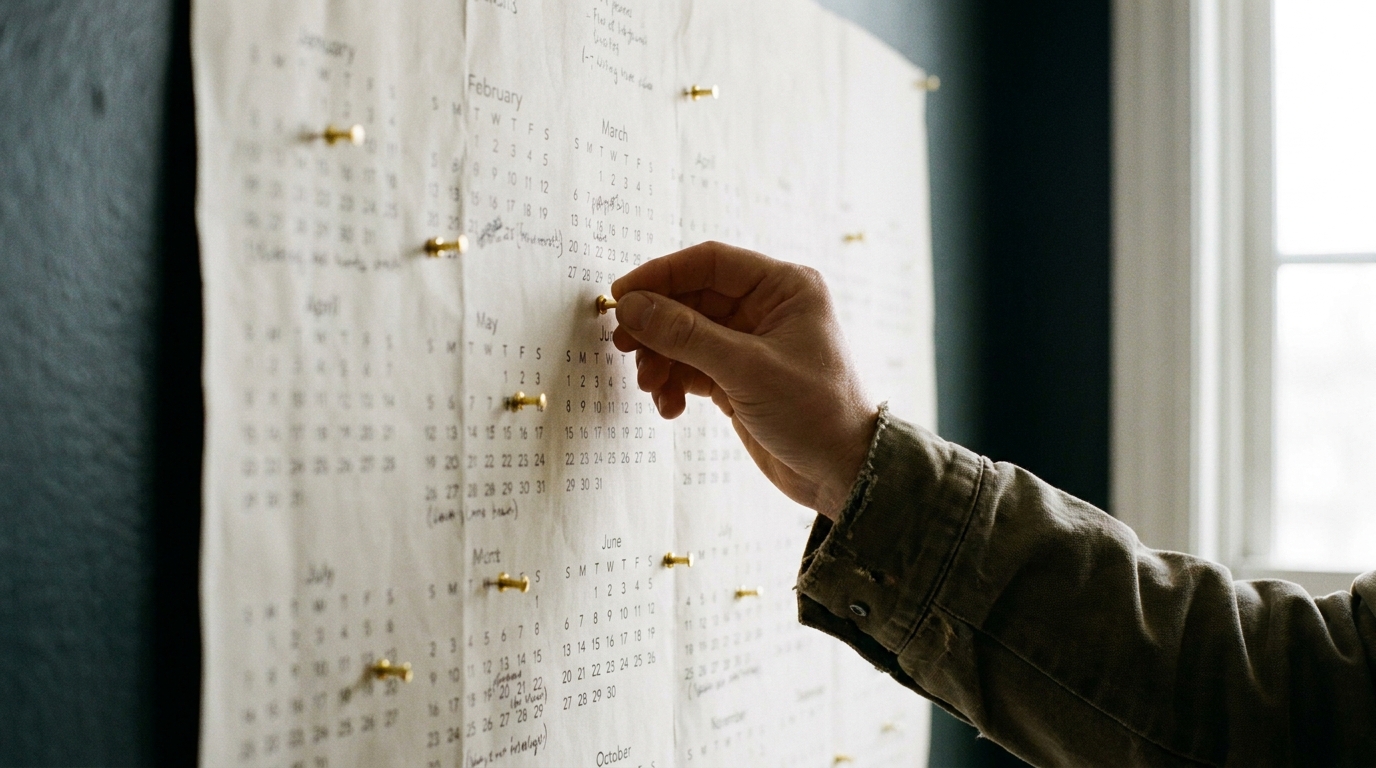
The public holiday law fixes 2 and 3 December as National Day holidays for the public and private sectors. In 2026 those days fall on Wednesday and Thursday, and because the law allows holidays to be moved or extended to create longer breaks, an announcement adding Friday 4 December (creating a five-day break through Sunday 6 December) is plausible but had not been made at the time of writing. Plan for both scenarios.
| Date | What happens | Brand implication |
|---|---|---|
| 3 November | Flag Day | Institutional moment; brands generally observe rather than campaign |
| Mid to late November | Decorations go up; retail promotions begin; school events | Launch window for campaigns with a retail or family angle; media books out |
| 30 November | Commemoration Day; minute’s silence at 11.30am | No promotional posting that morning; a respectful message or silence |
| 1 December | Eve of Eid Al Etihad; official show; fireworks begin | Peak evening for social; families out |
| 2 December | Eid Al Etihad, public holiday | Greeting content; experiential and retail live; low B2B activity |
| 3 December | Public holiday | Malls, parks, beaches and staycations busy; second day of retail |
| 4 to 6 December | Possible extension and weekend | Staycation and F&B demand; travel out of the country for some segments |
| 7 December onward | Return to work; Dubai Shopping Festival opens in the days after | Hand over to DSF and year-end campaigns |
Two timing rules follow. First, media and creative for National Day must be booked and produced in October: outdoor and mall media sell out, Arabic adaptation takes time, and the campaign must be live by the third week of November to catch the long-weekend planning. Second, the campaign has a hard stop. Nothing promotional should post on the morning of 30 November, and by 7 December the audience has moved on to DSF and year-end.
Campaign Ideas That Show Understanding, Not Decoration
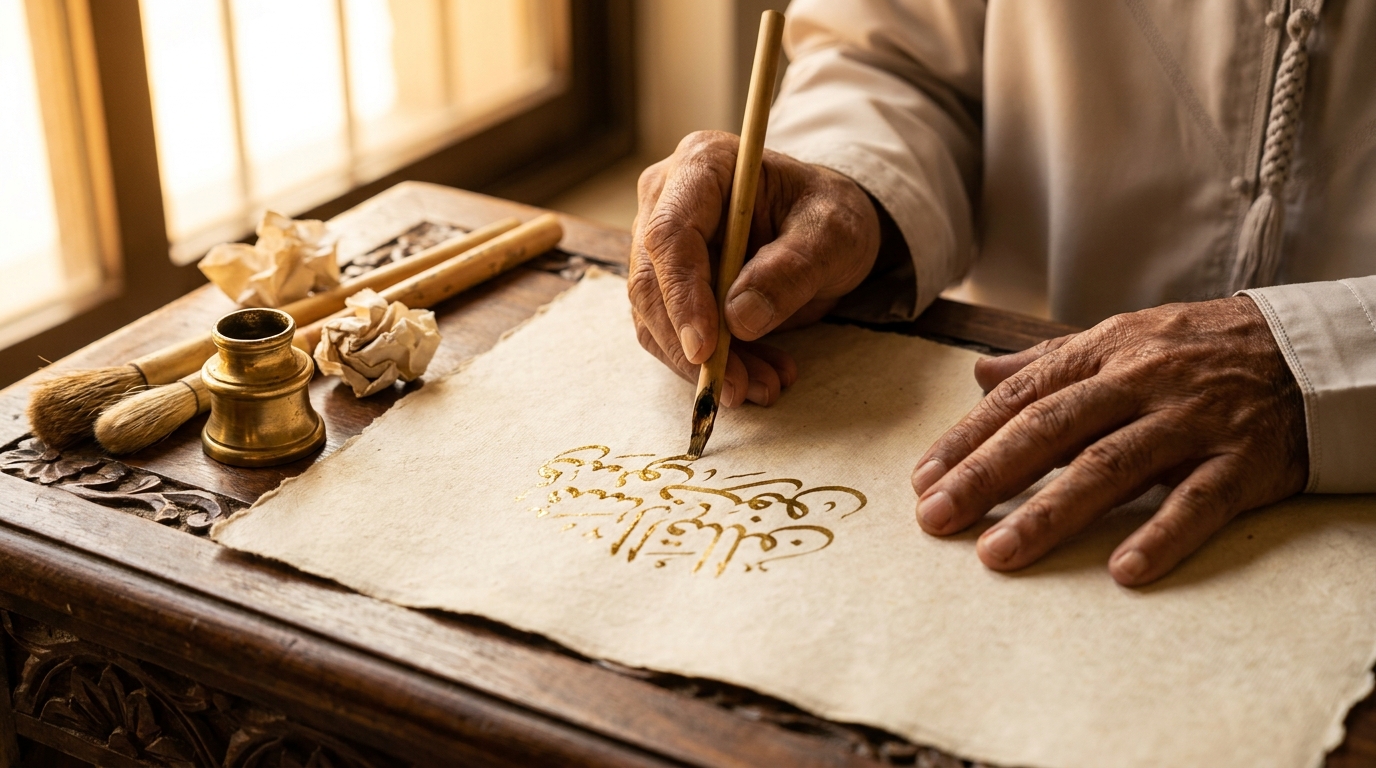
The test for any idea is whether it could only come from your brand and whether it says something true about the union. Below are approaches by category, each of which has worked for UAE brands when executed with care.
| Approach | How it works | Who it suits |
|---|---|---|
| Fifty-five stories | Fifty-five short pieces (one per year of the union) told by your own people or customers from different countries about what the UAE gave them; published across the week, in Arabic and English | Employers, hospitality, community brands |
| The team as the union | A single portrait of your staff, each holding the name of their home country, with a line about building something together here | Any business with a diverse workforce; B2B |
| Heritage made properly | A collaboration with an Emirati craftsperson, poet, calligrapher or chef, credited and paid, producing something that lasts beyond the week | Premium retail, F&B, hospitality |
| Generosity in action | A pledge tied to a national cause (Emirati Red Crescent, local charities), with the numbers reported afterwards, rather than a discount | Brands whose values genuinely include giving |
| Gratitude to the customer | A thank-you to customers who have been with you since your first year in the UAE, told by name (with consent) | Local businesses of any size |
| The Arabic-first film | A short film written in Arabic first by an Emirati or Gulf Arabic writer, subtitled in English, rather than translated into Arabic afterwards | Brands with Emirati audiences |
| The quiet product truth | A product story that connects to the country honestly (grown, made, designed or built here) with proof | Local manufacturers, F&B, design |
What these have in common is that the brand does the work. None of them can be made in an afternoon from a template, and that is why they stand out.
Ideas to avoid: discounts framed as patriotism (“55% off for the 55th”), which trivialise the day and can fall foul of the Consumer Protection Law if the reference price is not real; celebrity or ruler imagery; “we love the UAE” from a brand with no UAE story; and anything that uses the flag as design.
Arabic Copy: Get It Checked by a Native Speaker
Eid Al Etihad is the one week of the year when an Arabic error is guaranteed to be noticed, screenshotted and shared. Machine translation and non-native copywriters produce three kinds of failure: grammatical errors that read as carelessness, Modern Standard Arabic that is correct but cold where a Gulf phrasing would land, and mistranslations that change the meaning of the greeting itself. The standard greeting formulas (for example, congratulations on the anniversary of the union, or wishing the nation continued prosperity) have conventional Arabic forms, and getting them slightly wrong is visible to every Arabic reader.
The working rules are simple. Write the Arabic first, or brief a bilingual writer to transcreate rather than translate. Have a native Gulf Arabic speaker review every line before design starts, not after. Check the typography: Arabic set in a display font that does not support proper letter joining is a common failure in National Day creative, as is Arabic text that has been left-aligned or broken across lines by a designer who does not read it. Our upcoming guide to bilingual Arabic-English branding covers the typography in detail; for this week, the rule is that no Arabic leaves the building unread by someone who grew up reading it.
Brands That Should Stay Quiet, and Why That Is Fine
Not every brand should run a National Day campaign, and the audience knows the difference between participation and opportunism.
Stay quiet, or post a single respectful greeting and nothing more, if your brand has no story that touches the union’s values; if your product is in a restricted category (alcohol, tobacco, gambling) where any national-day association would be inappropriate and potentially unlawful; if you are an international brand that entered the market recently and has not yet earned a local voice; if your only idea is a discount; or if you cannot produce Arabic copy to the standard above in time.
A respectful greeting is a legitimate choice. A plain card in your brand’s own identity, with a correctly written Arabic and English greeting and no flag, posted on 2 December, does the job. It shows you know the day matters and does not pretend to a relationship you do not have. Many of the most respected brands in the UAE do exactly this, and spend their creative energy on Ramadan, where their story fits.
The worst outcome is not silence; it is a campaign that shows the brand does not understand where it is.
Blackstone’s creative team is bilingual and based in the UAE, and National Day sits in every annual calendar we build, with the Arabic written first and the symbol rules applied before design begins. If you would like the week planned rather than improvised, see our research and planning services, our creative and design services or start a project.
Frequently Asked Questions
When is UAE National Day in 2026?
Eid Al Etihad is on Wednesday 2 December 2026, the UAE’s 55th anniversary. The public holiday law fixes 2 and 3 December as holidays for the public and private sectors. An extension into Friday 4 December is possible but is announced by the government closer to the date.
Can a brand use the UAE flag in a National Day post?
Commercial use of the flag is treated as improper, and offending the flag is a crime under Federal Law No. 2 of 1971 as amended, carrying 10 to 25 years’ imprisonment and a fine of at least AED 500,000. The media content standards also require respect for the State’s symbols, with fines up to AED 500,000. Use the four colours as a palette, the anniversary number and the values of the union instead, and do not alter, overlay, drape or animate the flag.
What is the difference between National Day and Eid Al Etihad?
They are the same occasion. Eid Al Etihad, meaning Festival of the Union, is the official name adopted for the national celebration of the UAE’s formation on 2 December 1971.
Should brands post on Commemoration Day?
Commemoration Day on 30 November honours Emiratis who died in service and is observed with a minute’s silence at 11.30am. Brands should not run promotional content that morning; a respectful message or silence is appropriate, and campaign activity should resume afterwards.
What kind of National Day campaign works in the UAE?
Campaigns built on the union’s values (unity across nationalities, generosity, gratitude, progress) with a true connection to the brand’s own story, written in Arabic first and checked by a native Gulf Arabic speaker, and timed to be live by the third week of November. Discounts framed as patriotism and template flag posts do not work.
Plan your National Day campaign before October ends.
We write the Arabic first, apply the flag and symbol rules before design begins, and book media in time for the long weekend.
Plan My National Day Campaign →